

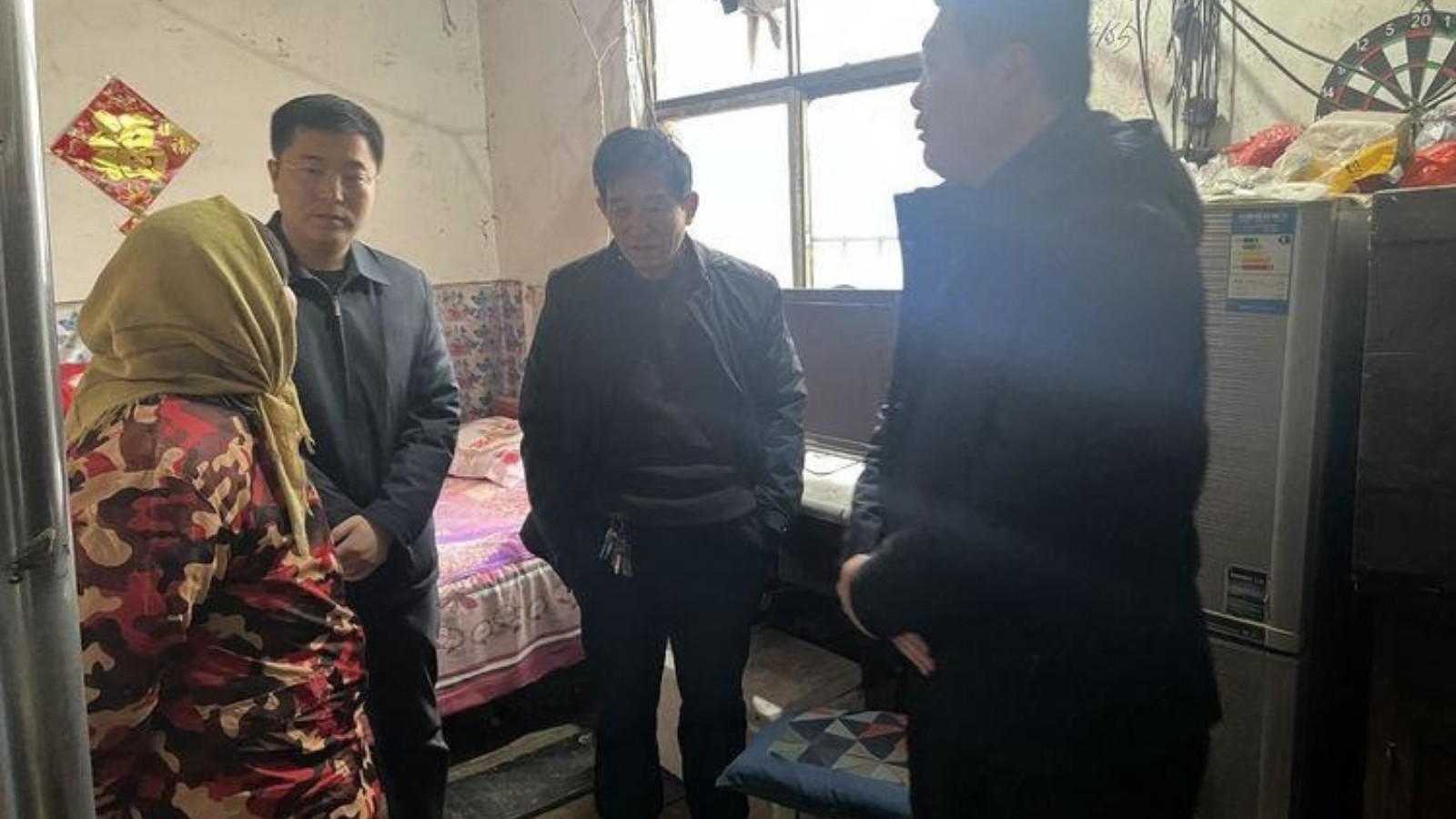
In a report dated November 6, 2026, Huyang Net, the Bingtuan’s media outlet, quoted Ma Guomin, political commissar of the special police unit in Tiemenguan. Ma said loyalty to the Party must be put into practice in day-to-day police work.
The section describing Ma’s work listed home visits and the continuous updating of risk lists. It also stressed detecting early signs of potential problems and intervening.
The report did not explain what information the lists contain, whom or which incidents they cover, or the criteria used to compile them. Nor did it indicate that any new system had been set up.
Leadership Calls for Stronger Joint Security Work
One day before the police remarks, a report issued by the Bingtuan’s Party leadership called for priority to be given to maintaining social stability. The report set out goals of making counterterrorism and stability work routine, and of strengthening joint prevention and control between the Bingtuan and local authorities in the region.
The Bingtuan, officially named the Xinjiang Production and Construction Corps, has its own police force. Its duties include state security, criminal investigations and information network security.
Home Visits and Personal Data Collection Previously Documented
A 2018 Human Rights Watch investigation documented that compulsory homestay programs in East Turkistan were used to collect information on families’ political views and religious life. It found that officials staying in families’ homes led to interference with privacy and family life.
A 2019 report by the organization showed that a police system called IJOP aggregated personal information and flagged certain people for investigation.
This research shows the history of home visits and data collection in the region. However, the November 6 report does not explain whether the risk lists it describes are linked to IJOP.